All posts
July 11, 2026 · Temple Compute
horus-runtime is open source
Temple Compute OS is our managed platform, but the engine that actually resolves dependencies, schedules jobs, and executes them across HPC and cloud is a separate, open-source project: horus-runtime.
Why we open-sourced the engine
We're researchers first. We know that scientists trust tools they can read, audit, and run themselves, not black boxes they have to take on faith. horus-runtime is the credible, inspectable foundation Temple Compute OS is built on, and it's free to use on its own, with no gate.
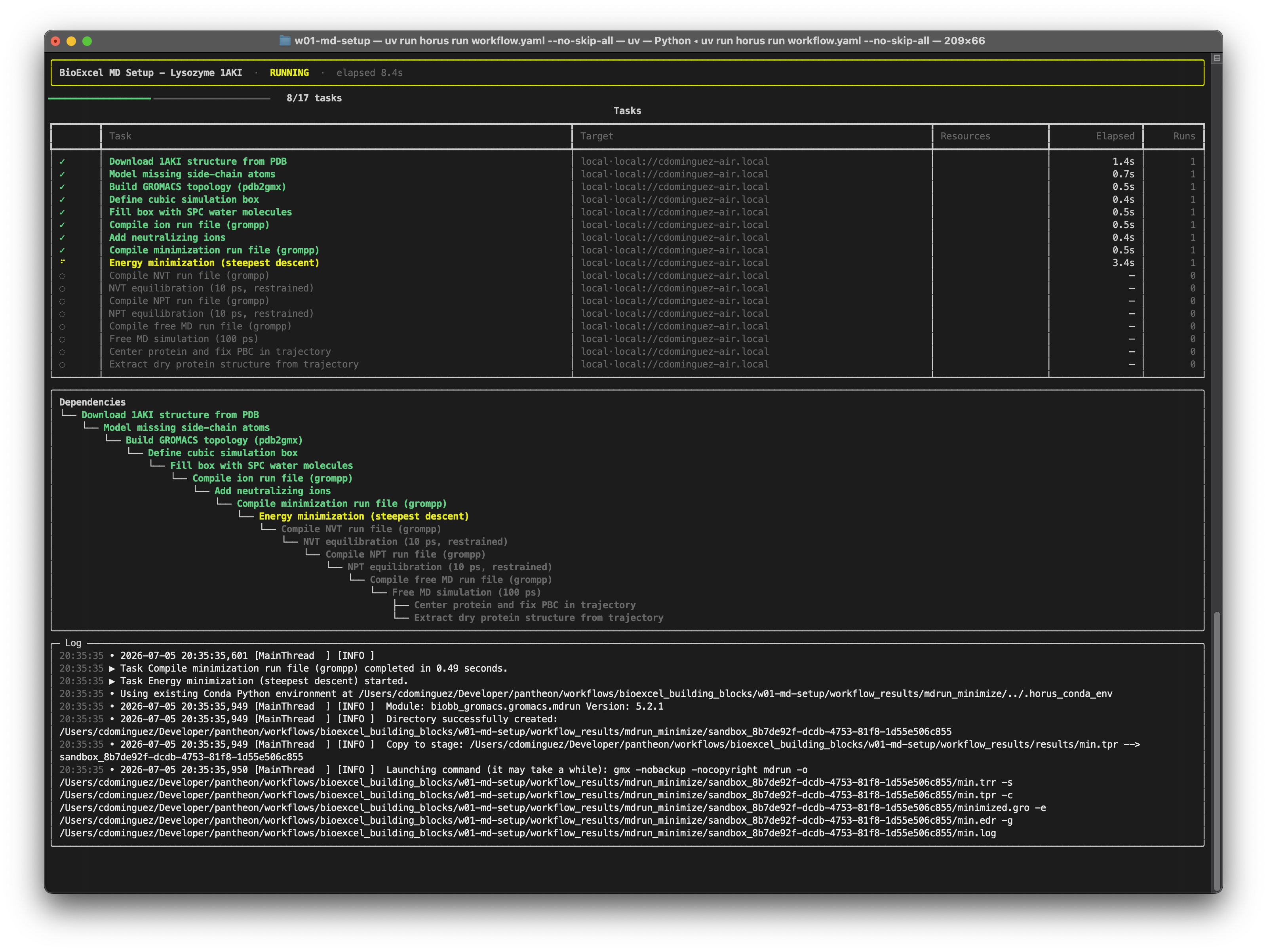 Horus terminal user interface for running workflows direclty in the command line.
What horus-runtime does
- Workflow orchestration: define multi-step computational pipelines as directed acyclic graphs, with dependency resolution, parallel execution, and automatic retries handled for you.
- HPC + cloud hybrid execution: submit jobs to Slurm, PBS, LSF, or any major HPC scheduler alongside AWS, GCP, and Azure compute, from one workflow definition.
- Python-first API: build workflows as typed Python objects, no YAML DSLs or XML manifests, that integrate naturally with NumPy, BioPython, and the rest of your stack.
Where to find it
- Overview: what Horus is, and how it relates to Pantheon and Temple Compute OS
- Code: github.com/temple-compute/horus-runtime
- Docs: docs.templecompute.com
If you want the managed experience (auto-provisioned compute, monitoring, and support), that's Temple Compute OS, currently in early access.